
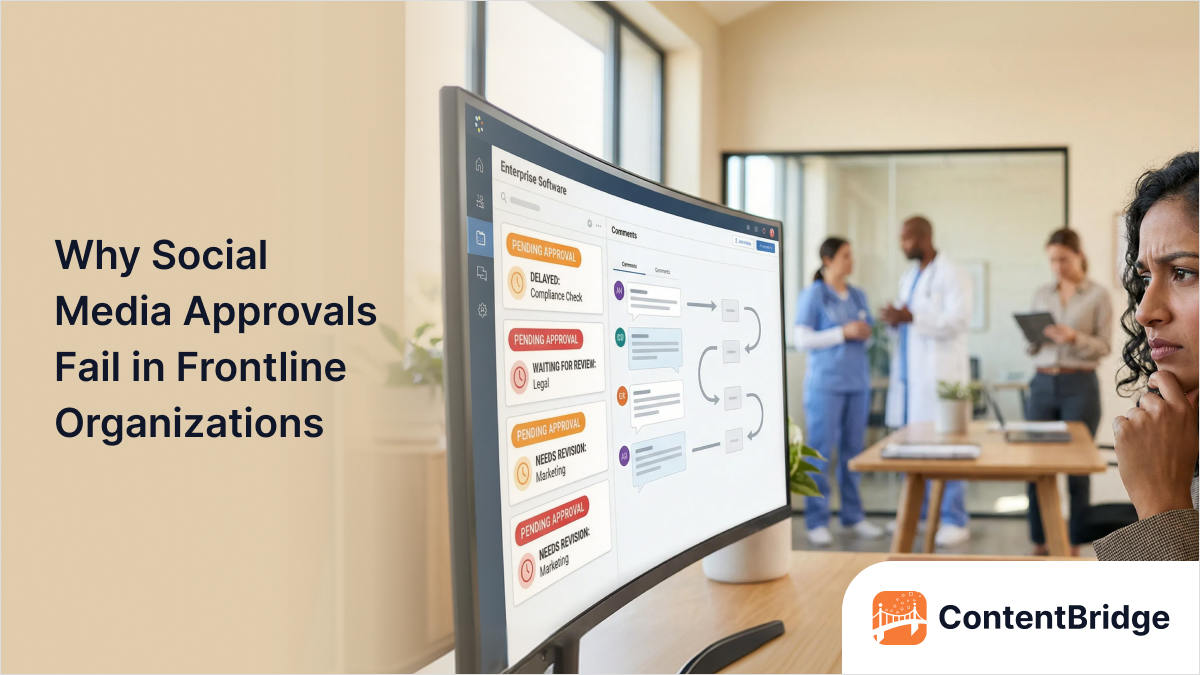

Social media approval workflows were designed for small, centralized marketing teams. They assume a limited number of creators, predictable content volumes, and plenty of time for reviews. In frontline organizations, none of these assumptions hold true.
Retail associates, delivery drivers, store managers, field technicians, and healthcare staff are closest to real customer moments. They are also the ones expected to create authentic, local, and timely social media content. When hundreds or even thousands of frontline employees want to post on behalf of the brand, traditional approval workflows quickly collapse under the pressure.
What follows is a mix of delays, missed opportunities, frustrated teams, and overly restrictive controls that end up discouraging frontline participation altogether. Instead of enabling safe and scalable social media activity, approvals become a bottleneck.
This blog breaks down why typical social media approval processes fail in frontline organizations, where they go wrong at scale, and why a fundamentally different approach is required to support frontline-driven social media without losing brand control.
The Real Cost of Broken Social Media Approval Processes
Approval breakdowns affect more than just publishing timelines. They create ripple effects across your entire organization. Understanding these costs helps justify investments in better systems.
1. Missed Opportunities and Stale Content
Time-sensitive content loses value with every hour of delay. A post about a trending topic becomes irrelevant after the moment passes. Seasonal promotions miss their window when stuck in approval limbo.
Frontline teams capture valuable real-time moments that need quick turnaround. When approvals take days, that authentic content becomes unusable. Your competitors with faster workflows capture the audience instead.
2. Brand Inconsistency Across Locations
Without clear approval standards, each location develops its own posting style. Some posts feel professional while others look amateur. Customers notice these inconsistencies and question your brand quality.
Regional variations can be helpful when done intentionally. However, uncoordinated variations create confusion and dilute your brand identity. A structured approval process ensures consistency while allowing appropriate localization.
3. Compliance and Legal Exposure
Regulated industries face serious consequences when unapproved content goes live. Healthcare organizations risk HIPAA violations due to the exposure of patient information. Financial services firms face FINRA penalties for unreviewed claims.
Even non-regulated businesses face legal risks from unapproved posts. Copyright issues, false claims, or inappropriate content can lead to lawsuits. Proper approval workflows protect your organization from these costly mistakes.
Stop Approval Chaos Before It Damages Your Brand
ContentBridge replaces scattered email threads with structured approval workflows. Every post follows your defined path to publication.
Why Social Media Approvals Fail in Frontline Industries: 5 Root Causes
Most approval breakdowns share common root causes. Identifying these problems is the first step toward solving them. Here are the five main reasons workflows fail.
1. Feedback Scattered Across Multiple Platforms
Approval requests arrive through email, Slack, text messages, and comment threads. Reviewers lose track of pending items across these different channels. Important feedback gets buried in conversations about unrelated topics.
This fragmentation creates several specific problems for frontline organizations.
- Marketing managers spend hours searching for the latest feedback on each post.
- Reviewers miss requests because they check different platforms at different times.
- Final versions become unclear when edits arrive through multiple channels.
- Historical records disappear when chat messages get deleted or archived.
2. Unclear Roles and Decision Authority
Teams often lack clarity about who approves what type of content. A regional manager might think legal handles compliance review. Legal assumes marketing already checked the brand guidelines. Nobody takes ownership, and content stalls.
This confusion multiplies in frontline organizations with complex structures.
- Multiple departments have overlapping responsibilities for different content aspects.
- New team members inherit processes without understanding approval requirements.
- During busy seasons, temporary staff bypass established workflows entirely.
- Escalation paths remain undefined when disagreements arise between reviewers.
3. Too Many Approvers Creating Bottlenecks
Some organizations require approval from five or more people for every post. Each additional approver adds potential delays to the process. A single unavailable reviewer stops the entire workflow.
Well-intentioned oversight often becomes a counterproductive bottleneck.
- Senior leaders get copied on routine posts that do not need their attention.
- Compliance teams review content that poses no regulatory risk.
- Multiple people provide duplicate feedback on the same issues.
- Approval requirements designed for campaigns apply to simple daily posts.
4. Manual Tracking Without Automated Systems
Many frontline teams still track approvals using spreadsheets and email folders. These manual systems require constant attention to stay up to date. One missed update creates confusion about content status.
Manual tracking fails because it depends on perfect human execution.
- Spreadsheets become outdated when someone forgets to log an approval.
- Email folders fill up, and important requests get overlooked.
- Nobody receives automatic reminders when deadlines approach.
- Status updates require manual communication instead of real-time visibility.
5. Mobile and Timezone Limitations
Frontline approvers often work away from desks and computers. They cannot easily review content on mobile devices using desktop-focused tools. International teams struggle to coordinate across different working hours.
These limitations hit frontline organizations especially hard.
- Field managers check email only at the start and end of shifts.
- Store supervisors lack time between customer interactions for thorough reviews.
- Night shift content creators wait until morning for day shift approvals.
- Regional differences in holidays and schedules create unexpected delays.
Understanding these root causes reveals why simple fixes rarely work. Organizations need a social media management tool built specifically for frontline workers. ContentBridge enables your frontline teams to create and submit content on mobile while approval workflows ensure every post meets brand standards before publication. No shared passwords, no direct account access, just authentic content with complete control.
How Posting Unapproved Content Hurts Brand Reputation
Failed approval processes do more than slow down publishing. They directly damage the quality of content that eventually goes live. Quality suffers in predictable ways when workflows break down.
1. Brand Voice Gets Lost in Translation
Content passes through multiple reviewers, each making small changes. The original creative vision disappears as each person adjusts the tone. Final posts sound generic because distinctive elements got edited out.
Frontline content creators become discouraged when their work gets sanitized. They stop submitting authentic, engaging content. The cycle continues with increasingly bland output.
2. Errors Slip Through Rushed Reviews
When content finally reaches approval, reviewers feel pressure to approve quickly. They skim rather than read carefully. Typos, broken links, and factual errors make it to publication.
Rushed reviews also miss compliance issues that require careful analysis. A reviewer might approve content with unverified claims just to clear their queue. These shortcuts create liability that proper processes would catch.
3. Last-Minute Changes Create New Problems
Approvers sometimes request changes right before publication deadlines. Content creators make quick edits without proper review. These hasty changes often introduce new errors or compliance issues.
The cycle of changes and rushed fixes exhausts teams and degrades output. People start cutting corners because proper processes take too long. Quality becomes a casualty of broken workflows.
Take Control of Frontline Social Media Approvals Without Blocking Access
ContentBridge gives marketing leaders visibility and control without slowing down frontline content creation.
Signs Your Social Media Approval Process Needs an Overhaul
Not every organization recognizes when its approval process has failed. Problems develop gradually and become accepted as normal. Watch for these warning signs in your organization.
1. Content Regularly Misses Optimal Publishing Windows
Track how often time-sensitive content is published too late to matter. If more than a quarter of your timely posts miss their moment, approvals are too slow. This pattern indicates systemic problems, not occasional delays.
2. Team Members Bypass the Official Process
When people start going around the system, the system has failed them. Ask your team honestly about workarounds they use. Unofficial shortcuts reveal where official processes create too much friction.
This behavior is a common response to unresolved frontline content approval bottlenecks within rigid approval systems.
3. Nobody Can Explain the Current Approval Path
Request a flowchart of your approval process from three different team members. If you get three different answers, your process lacks clarity. Clear workflows produce consistent explanations from everyone involved.
4. Approved Content Still Contains Errors
Review your published posts for errors that should have been caught. Grammar mistakes, broken links, and off-brand messaging indicate rushed approvals. Quality problems, despite multiple reviewers suggesting process dysfunction.
5. Approvers Feel Overwhelmed and Behind
Survey your approval team about their workload and stress levels. Chronic backlog and frustration indicate unsustainable processes. Burnt-out reviewers cannot provide the careful attention content requires.
Recognizing these signs is the first step toward building better systems. Denial about process problems only allows them to grow worse over time.
How to Build Social Media Approval Workflows That Actually Work
Fixing broken approval processes requires systematic changes, not quick patches. These strategies address the root causes identified earlier. Implement them together for maximum impact.
1. Define Clear Roles and Approval Authority
Document exactly who approves what type of content and why. Create a simple matrix matching content types to required approvers. Share this document widely and reference it when questions arise.
Build these elements into your role definitions.
- Specify which content types require compliance review versus standard marketing approval.
- Identify backup approvers for each role to prevent single-person bottlenecks.
- Establish clear escalation paths for content that reviewers cannot agree on.
- Define approval timeframes so everyone knows expected response windows.
2. Reduce Approver Count to Essential Reviewers
Audit your current approval chain and question each required sign-off. Remove approvers who add time but not value to the process. Reserve multiple approvers for high-risk content only.
Streamline your process with these adjustments.
- Create different approval paths for routine posts versus campaign content.
- Empower trained content creators to publish pre-approved content types.
- Trust compliance teams to handle regulatory review without redundant legal sign-off.
- Eliminate courtesy copies to executives who do not actively review.
3. Centralize All Approval Activity In One Platform
Move all feedback, revisions, and approvals into a single system. Eliminate email threads, Slack messages, and text conversations about content. Ensure everyone accesses the same source of truth.
Use a frontline-focused social media management platform like ContentBridge. Such platforms offer social media approval workflows purpose-built to suit frontline industries’ complexities. Centralization through a social media management tool provides immediate benefits to frontline organizations:
- Reviewers can see all pending items in a single dashboard without searching across multiple channels.
- Content creators track status without having to ask for updates.
- Historical records remain accessible for audits and process improvement.
- Mobile access enables approvals from anywhere at any time.
4. Automate Notifications and Deadline Management
Configure automatic alerts when content needs attention. Send reminders as deadlines approach without manual follow-up. Route content automatically to the next approver when a review is completed.
Automation reduces the human effort required to keep content moving.
- Approvers receive alerts through their preferred channels when items need review.
- Overdue items automatically escalate to backup approvers or managers.
- Content creators get notified immediately when feedback arrives.
- Analytics track approval times to identify persistent bottlenecks.
5. Enable Mobile-First Review for Frontline Teams
Choose tools like ContentBridge that work well on smartphones, not just desktop computers. Ensure approvers can review, comment, and approve from mobile devices. Design interfaces for quick interactions between other responsibilities.
Mobile-first design acknowledges how frontline approvers actually work.
- Managers can approve content during brief breaks between tasks.
- Field supervisors review posts from job sites without returning to offices.
- International teams approve during their local working hours.
- Push notifications ensure urgent items get immediate attention.
Implementing these strategies transforms approval from a bottleneck into an enabler. Content moves faster while maintaining necessary oversight and quality control.
Enable Frontline Social Media Without the Bottlenecks
ContentBridge replaces complex approval chains with scalable, policy-based workflows built for large frontline teams.
How ContentBridge Fixes Broken Social Media Approval Workflows for Frontline Teams
Traditional social media approval workflows were never built for frontline organizations. They struggle to handle scale, slow down time-sensitive posts, and place unnecessary pressure on central marketing and compliance teams. As a result, frontline employees either stop posting altogether or find ways to bypass approvals, creating risk instead of reducing it.
Frontline social media needs a different model. One that balances speed with control, empowerment with governance, and local authenticity with brand consistency. This is where ContentBridge fits naturally into the workflow.
ContentBridge is built specifically for frontline-driven social media. Instead of routing every post through long approval chains, it enables smarter, policy-based approvals that scale across hundreds or thousands of frontline users. Pre-approved content frameworks, clear posting guidelines, and role-based controls allow frontline teams to post confidently while staying within brand and compliance boundaries.
For central teams, ContentBridge reduces review fatigue and eliminates constant back-and-forth. For frontline teams, it removes friction and delays, making it easier to share real moments in real time. The result is faster publishing, safer content, and higher frontline participation without sacrificing oversight.
Contact us today to see how ContentBridge helps frontline organizations build approval workflows that actually work.
Frequently Asked Questions
How many approvers should a social media post require?
The optimal number depends on the content type and the organization’s risk tolerance. Routine posts often need just one trained reviewer. High-risk content involving legal claims or regulated topics may require two or three approvers.
The key is matching approval complexity to actual risk. Simple posts should flow quickly through minimal review. Save multi-level approvals for content that genuinely requires multiple perspectives.
How long should social media approvals take?
Best-in-class organizations approve routine content within 24 hours. Time-sensitive content should have expedited paths with same-day turnaround. Campaign content with higher stakes might allow 48-72 hours.
Set clear expectations and measure performance against them. If approvals consistently exceed targets, investigate the root causes creating delays.
Can approval workflows work for organizations with multiple locations?
Structured workflows actually help multi-location organizations maintain consistency. Central marketing can establish brand standards while allowing regional customization. Local teams submit content that flows through appropriate local and corporate review. The key is designing workflows that accommodate legitimate regional needs. Build flexibility into the system rather than forcing every location through identical paths.
How do we handle urgent content that cannot wait for normal approval?
Create a separate expedited path for genuinely urgent situations. Define clear criteria for what qualifies as urgent. Designate specific approvers who commit to rapid response for urgent content. Avoid overusing the urgent path, which undermines both regular and expedited workflows. Track urgent requests and review whether they truly require expedited handling.
What should we do if approvers consistently miss deadlines?
First, ensure deadlines are realistic given approver workloads. Unrealistic expectations guarantee failure regardless of tools or processes. If deadlines are reasonable, investigate whether approvers have proper training and access.
Consider whether the right people serve as approvers. Sometimes, deadline problems indicate role misalignment rather than individual performance issues. Restructuring responsibilities may solve persistent problems.