

Your hospital employs hundreds of nurses, doctors, administrative staff, and support workers. Each has personal social media accounts outside work. Yet social media violations by staff cost hospitals millions in penalties and destroy patient trust. One careless post about a patient’s condition creates legal liability. A shared photo from the clinic floor damages reputation instantly.
According to Verizon’s 2025 Data Breach Investigations Report, human error caused 60% of healthcare data breaches. Social media negligence represents a significant portion of these incidents. Training directly addresses this preventable risk category.
Effective training transforms social media risk into a competitive advantage when done right. Healthcare organizations that prioritize HIPAA training build stronger cultures of compliance. Staff understand privacy boundaries and make better decisions independently. Patients trust your organization because privacy violations become rare.
This guide reveals how successful hospitals train 300+ staff on HIPAA-compliant social media. Learn role-based training strategies that address specific job functions. Discover enforcement mechanisms that maintain consistent standards. Implement scalable programs that reach night shift workers and part-time employees. Your entire organization will understand social media compliance.
Why HIPAA Social Media Training Is Essential for Every Healthcare Organization
Hospital staff face natural pressure to share their work on social media, from medical breakthroughs to patient success stories. Without proper training, this impulse creates privacy disasters. HIPAA mandates training for all workforce members who handle protected health information, making this a regulatory requirement with enforcement consequences, not an optional recommendation.
- The Privacy and Security Rules require workforce training. Both rules mandate that all employees receive training on how PHI must be protected, including across social media channels. Non-compliance with training requirements itself constitutes a regulatory violation.
- Staff need to recognize PHI beyond obvious identifiers. Training teaches employees that patient photos, background whiteboards, metadata in images, and even responding to online reviews with clinical details all constitute potential HIPAA violations.
- Social media creates unique risks that general HIPAA training does not cover. Standard annual refreshers focus on EHR access and physical records. Dedicated social media training addresses platform-specific risks like tagging, direct messages, comments, and user-generated content.
- Trained staff become your first line of defense. Employees who understand social media risks identify potential violations before content is published, reducing reliance on technical safeguards and post-publication monitoring alone.
- Training builds confidence that drives participation. Staff who clearly understand compliance boundaries are more willing to contribute to content programs, while untrained employees avoid participation entirely out of fear of making mistakes. This hesitation is one of the key reasons why frontline teams don’t participate in social media programs even when they want to.
Comprehensive HIPAA social media training protects your staff, your patients, and your organization simultaneously. The investment in proper training always costs a fraction of what a single preventable breach demands in fines, legal fees, and lost patient trust.
HIPAA Social Media Violations Every Hospital Employee Must Understand
Staff need clear definitions of what constitutes violations before any training can succeed. Protected health information extends far beyond patient names and medical record numbers to include visual identifiers in photos, contextual details that allow patient identification, and even interactions with patient posts online. Understanding these boundaries is the foundation of effective social media compliance. Beyond HIPAA, you also need to train staff to avoid FDA and FTC medical claims violations on social media, since treatment outcome posts and product endorsements create a separate regulatory risk that HIPAA training alone does not address.
1. Posting Patient Photos or Clinical Content Without Authorization
Sharing patient photos taken in clinical settings, livestreaming activities on TikTok or Instagram, and posting before-and-after images without written consent all constitute HIPAA violations. A 2025 case involved a Florida nurse who livestreamed medication administration on TikTok, resulting in immediate termination, referral to the state Board of Nursing, and potential license suspension from a single momentary decision.
2. Disclosing Patient Details in Comments, Reviews, or Direct Messages
Sharing medical histories in response to social media comments, discussing cases in direct messages, and responding to negative reviews using patient health details all cross legal lines. One provider who responded to a Google review with patient information faced an OCR investigation that resulted in significant fines and lasting reputational harm.
3. Interacting With Patient Health Content Online
Liking or commenting on a patient’s health-related posts creates liability that many staff do not recognize. Environmental PHI visible in background photos, facility signage, and whiteboards also breaches compliance even when no patient is directly named or tagged in the content.
4. Assuming Private Accounts Offer Protection
Staff often believe private social media accounts eliminate disclosure risk, but social media sharing can bypass privacy settings through screenshots, reposts, and platform algorithms. A post intended for a small audience can reach thousands, and HIPAA applies regardless of whether the account is personal or professional.
5. Why These Mistakes Keep Happening
Most violations stem from three sources: staff do not understand what counts as protected information, they feel natural pressure to share meaningful work experiences, and they never received training specific to social media risks. Traditional HIPAA training covers email, phone, and in-person conversations but fails to address the unique vulnerabilities that social media platforms create. Because of these gaps, many healthcare organizations restrict staff participation entirely, reflecting a broader industry pattern where fear of compliance risks stops brands from letting frontline teams post instead of building clear governance frameworks.
Every violation described above was preventable with proper training. For a deeper look at how these risks manifest across healthcare organizations, read our guide on the real compliance risks of frontline social media and how to avoid them. Hospital employees who understand exactly what constitutes a HIPAA social media violation, why private accounts offer no protection, and how even well-intentioned interactions create liability will make smarter decisions that protect both their patients and their careers.
Enable HIPAA-Compliant Social Media for Healthcare
ContentBridge empowers frontline staff with mobile-first content creation, role-based access controls, and built-in compliance guardrails that prevent violations before they happen.
Role-Based HIPAA Social Media Training for Every Level of Hospital Staff
One-size-fits-all training fails at large hospitals because job functions create dramatically different social media risks. Effective training addresses specific vulnerabilities in each role with practical scenarios that staff actually remember.
1. Nursing and Clinical Staff
Nurses and doctors handle patient information constantly, making their training the most critical. Focus on realistic scenarios they encounter daily, such as a colleague asking about a patient on social media, a patient sending a friend request, or the impulse to post about a rare case.
Include case studies of nurses who faced discipline for violations, as real stories create an emotional impact that abstract policies cannot match. Teach the “minimum necessary” standard through specific examples showing why mentioning a diagnosis, ICU admission, or location detail crosses the line. Training that builds this level of awareness creates the foundation for hospital programs that empower trained staff to share content safely rather than keeping them silent out of uncertainty.
2. Administrative and Office Staff
Administrative employees access patient information through scheduling, billing, and insurance systems, creating different vulnerabilities than clinical staff. Training should emphasize that patient data appears in unexpected places and that sharing appointment details, posting about workplace volume during flu season, or mentioning unusual cases all create identifiable patterns that violate privacy rules.
3. Marketing and Communications Teams
Marketing staff manage hospital social media accounts and create patient-facing content daily. Training should cover PHI screening in photos and videos, metadata stripping, patient authorization requirements, and the distinction between compliant storytelling and privacy violations. This team needs the deepest understanding of platform-specific risks, including comments, tags, direct messages, and user-generated content moderation. Our guide on how to ensure every hospital social media post is HIPAA compliant covers the complete pre-publishing workflow marketing teams should follow.
4. Leadership and Department Managers
Executives and managers set the compliance culture for their teams. Training should focus on their responsibility to enforce policies, recognize warning signs of non-compliance, and respond appropriately when violations are reported. Leaders who visibly prioritize social media compliance influence staff behavior far more effectively than written policies alone.
5. Non-Clinical Support Staff
Housekeeping, cafeteria, and maintenance teams access patient areas regularly and observe activities they may not fully understand. Training must make clear that workforce status does not determine privacy obligations, and everything they see, overhear, or encounter in clinical settings is confidential and protected under HIPAA, regardless of their role.
6. Volunteers and Contract Workers
Hospitals often overlook volunteers, interns, and third-party contractors who access patient areas or systems. These individuals must receive the same foundational social media compliance training as permanent staff, with clear documentation that training was completed before any access to hospital facilities or information is granted.
Role-based training ensures every employee, leader, and contractor receives guidance relevant to the specific risks they face daily. Hospitals that customize training by job function will see higher retention, stronger compliance, and fewer violations across every department and workforce level.
Automate PHI Screening Before Content Goes Live
Stop relying on manual reviews alone. ContentBridge flags potential HIPAA violations automatically, giving your compliance team confidence that every post meets regulatory standards.
How to Design HIPAA Social Media Training That Actually Changes Staff Behavior
The format and delivery method determine whether training changes behavior or gets forgotten. Long lecture-style sessions frustrate healthcare workers juggling patient care. Blended approaches combining microlearning, in-person workshops, and flexible scheduling maximize impact across all workforce levels.
1. Use Microlearning Modules That Fit Into Busy Shifts
Break complex topics into five to ten-minute modules that staff complete between patient interactions. Design each module around specific scenarios like “what to do if a patient messages you on social media” rather than abstract rules. Include videos, infographics, and screenshots of violation examples, as visual learning creates stronger recall than text alone, and completion rates increase dramatically with shorter formats.
2. Combine Online Learning With In-Person Workshops
Online modules cover foundational knowledge independently, while in-person sessions allow scenario discussions, role-playing exercises, and peer learning in small groups. Partner clinical leadership with training delivery for maximum credibility, as staff take compliance far more seriously when physician champions and senior nurses visibly advocate for it.
3. Make Training Accessible for Night Shift and Part-Time Staff
Schedule in-person sessions across day, evening, and night shifts with recorded alternatives for part-time staff. Mobile-accessible modules allow completion from any location around patient care schedules. Track completion through automated systems that alert managers to late completions and ensure documentation meets the six-year regulatory retention requirement.
4. Test Knowledge Through Real-World Scenarios
Move beyond quizzes that test memorization by presenting staff with realistic social media situations and asking them to identify violations. Scenario-based assessments reveal whether training created genuine understanding and highlight areas where additional reinforcement is needed.
5. Refresh Training Annually With Updated Content
Social media platforms, regulations, and risks evolve constantly. Annual refresher training should incorporate recent violation case studies, updated platform features, and new content formats to keep guidance current and relevant to how staff actually use social media today.
Effective training is not a one-time event but an ongoing program that adapts to your workforce. Hospitals that invest in flexible, scenario-based, and role-specific training will build a culture where every employee understands social media risks and makes compliant decisions instinctively.
How to Build a HIPAA Compliance Culture That Lasts Beyond Training
Training is the foundation, but not the entire solution for sustainable compliance. Organizational culture determines whether staff follow standards when no one is watching. Leadership commitment, consistent enforcement, and positive reinforcement together create lasting behavior change.
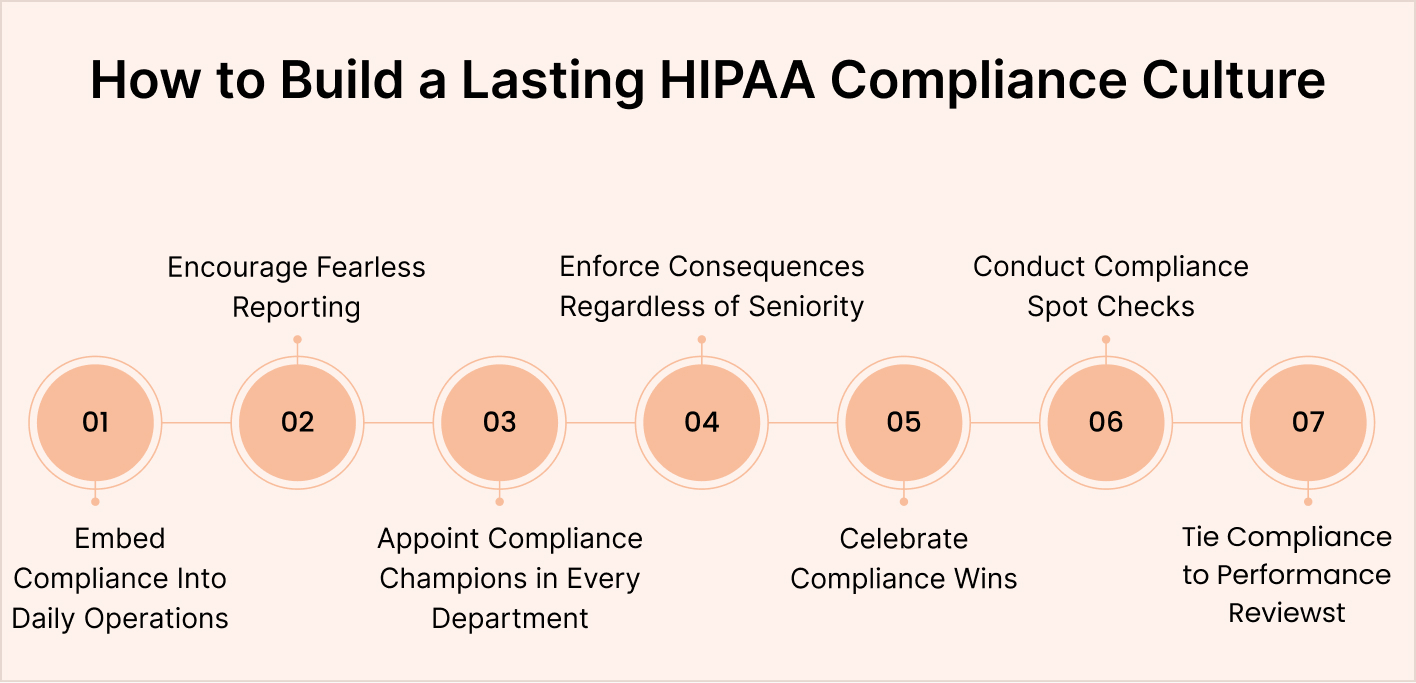
1. Embed Compliance Into Daily Operations, Not Just Annual Events
Compliance should be part of shift handoffs, team huddles, and department meetings rather than a once-a-year training checkbox. Brief weekly reminders about social media risks keep awareness fresh. When compliance becomes part of a daily conversation, staff treat it as routine practice rather than an interruption to their real work. Pairing daily reminders with a structured content calendar that bakes compliance into every scheduled post reinforces training through the actual publishing process rather than leaving it to memory.
You can use ContentBridge, a healthcare social media management tool that helps enforce compliance in your daily social media management practices. ContentBridge is built for the healthcare industry’s unique compliance requirements and ensures that it is thoroughly followed in every social media post.
2. Empower Staff to Report Concerns Without Fear
Create anonymous reporting channels where employees can flag potential violations or raise compliance questions safely. A culture of silence around mistakes leads to hidden breaches that escalate into major incidents. Without proper reporting systems, organizations face the “who approved this post” problem that causes social media audits to fail. When staff trusts that reporting concerns leads to resolution rather than blame, problems get caught earlier and resolved faster.
3. Appoint Compliance Champions Across Every Department
Select respected peer advocates in each department who reinforce compliance standards informally. Champions answer quick questions, model correct behavior, and bridge the gap between formal policies and real-world practice. Staff are more likely to follow guidelines when a trusted colleague reinforces them rather than a distant compliance office.
4. Enforce Consequences Consistently Regardless of Seniority
A nurse and a physician committing identical violations must face equivalent discipline. Document a clear sanctions policy specifying consequences from retraining for first offenses to termination for repeated violations. Perceived favoritism toward senior staff or high performers undermines the entire compliance program faster than any other factor.
5. Celebrate Compliance Wins Publicly and Regularly
Recognize teams maintaining excellent compliance through department shoutouts, monthly awards, and visible leadership acknowledgment. Reward staff who proactively identify risks or report concerns before they become breaches. Positive reinforcement builds sustainable compliance culture more effectively than relying on fear of punishment alone.
6. Conduct Unannounced Compliance Spot Checks
Periodic unannounced reviews of social media accounts, content queues, and approval workflows reveal whether documented procedures are actually being followed. Spot checks identify gaps between policy and practice that scheduled audits miss. Share findings constructively to improve processes rather than punish individuals.
7. Tie Compliance Performance to Annual Reviews and Advancement
Integrate social media compliance metrics into performance evaluations, promotion criteria, and departmental scorecards. When compliance directly impacts career progression, staff prioritize it alongside clinical performance. This signals that the organization values patient data protection as a core professional competency, not an administrative afterthought.
Sustainable compliance is not built through a single policy or training program. It requires collaboration across departments, which is why understanding why frontline, marketing, and legal teams fail to collaborate on social media is essential. Hospitals that weave accountability, recognition, peer advocacy, and measurable standards into their organizational fabric will create a workforce that protects patient data instinctively, whether or not anyone is watching.
Track Social Media Compliance Across All Departments
ContentBridge dashboards give leadership full visibility into publishing activity, approval status, and compliance metrics across every location and department in real time.
Common HIPAA Training Challenges in Large Healthcare Organizations (And How to Overcome Them)
Large-scale training programs encounter predictable obstacles that derail poorly planned initiatives. Understanding these challenges in advance helps you build solutions rather than scrambling reactively.
1. Training Fatigue Across an Already Overburdened Workforce
Healthcare staff face constant mandatory training requirements, and adding HIPAA social media training creates fatigue that leads to cynical attitudes and disengaged participation.
How to Overcome This
- Integrate social media training with broader HIPAA compliance programs rather than creating standalone sessions.
- Connect social media scenarios to general privacy and security awareness initiatives that already exist.
- Respect staff time by delivering precise, efficient content rather than padding sessions with unnecessary material.
- Use microlearning modules that fit into breaks rather than requiring long blocks of dedicated time.
2. Diverse Learning Styles and Language Barriers
Hospital staff includes people who learn differently, and multilingual employees may struggle with English-only training materials, leading to comprehension gaps that create compliance risks.
How to Overcome This
- Provide training in multiple formats, including video modules, written transcripts, infographics, and interactive scenarios.
- Translate critical materials into languages your workforce speaks and provide interpreters for live sessions.
- Partner with bilingual staff for training delivery to build trust and improve understanding.
- Offer hands-on practice opportunities for employees who learn best through doing rather than reading.
3. High Turnover Creating Constant Onboarding Cycles
Hospitals experience significant turnover among nurses and support staff, and each new hire must complete training within a reasonable timeframe without overwhelming administrative resources.
How to Overcome This
- Create automated onboarding workflows that deploy training immediately upon hire.
- Require new employees to complete HIPAA social media training within their first week before accessing any accounts.
- Use onboarding checklists with automated reminders to prevent training delays due to manager oversight.
- Update training content annually with fresh case studies and regulatory changes to keep refresher sessions engaging.
4. Inconsistent Training Quality Across Departments
Different departments often deliver training with varying levels of depth and accuracy, creating compliance gaps where some teams are well-prepared while others have only a surface-level understanding.
How to Overcome This
- Standardize training content centrally so every department delivers the same core material.
- Assign compliance champions in each department to ensure consistent delivery and follow-up.
- Use post-training assessments to measure comprehension and identify departments needing additional support.
- Share compliance performance metrics across departments to create healthy accountability.
5. Measuring Whether Training Actually Changes Behavior
Completion rates alone do not indicate whether staff understood the material or will apply it in practice, leaving hospitals unable to prove training effectiveness during regulatory reviews.
How to Overcome This
- Replace simple quizzes with scenario-based assessments that test real-world decision-making.
- Track post-training compliance metrics like violation rates, incident reports, and content rejection rates over time.
- Conduct periodic spot checks to observe whether documented procedures are being followed in practice.
- Correlate training completion with departmental compliance performance to identify where reinforcement is needed.
Every training challenge in large healthcare organizations has a practical solution. Hospitals that proactively address fatigue, accessibility, turnover, consistency, and measurement will build programs that deliver lasting compliance rather than just checking a regulatory box.
How ContentBridge Simplifies HIPAA-Compliant Social Media Management Across Your Entire Hospital
Managing social media compliance across hundreds of staff, multiple shifts, and various departments creates coordination challenges that undermine even the best training efforts. The problem is not staff commitment to privacy but the lack of an integrated infrastructure to put that training into practice. ContentBridge is a social media management platform built for frontline workers that bridges the gap between compliance knowledge and daily execution.
ContentBridge delivers mobile-accessible content creation tools directly to clinical and administrative staff, eliminating workflow bottlenecks that slow down compliant publishing. Role-based access controls ensure each staff member can only perform actions appropriate to their position, while automated compliance checks flag potentially problematic posts before they reach social channels. Manager dashboards provide full visibility into content approvals, publishing activity, and compliance status across all departments.
Built-in governance tools reinforce HIPAA standards in real-world contexts by integrating approval workflows, automated PHI screening, and audit trail documentation into every step of the content lifecycle. Staff certifications and incident tracking reveal whether compliance processes are working, while data-driven insights identify departments needing additional support.
Schedule a demo with ContentBridge today to see how hospitals manage compliant social media publishing across all locations and departments.
Frequently Asked Questions
How often should hospitals conduct HIPAA social media training?
Initial training should occur during onboarding before employees access patient information. Annual refresher training maintains knowledge and covers policy updates. According to HIPAA regulations, training must occur when material changes occur to policies. Some hospitals conduct refresher training semiannually, depending on incident frequency. Quarterly microlearning modules supplement annual comprehensive training effectively.
What should hospitals include in HIPAA social media training materials?
Effective training covers what constitutes protected health information and examples specific to healthcare. Real case studies of HIPAA violations help staff recognize problems in context. Social media platform-specific risks, including screenshot sharing and private message persistence, deserve attention. Training should address reporting procedures for suspected violations and consequences for enforcement. Role-specific scenarios make content relevant to individual staff members.
How can hospitals ensure training compliance for all 300+ staff members?
Use Learning Management Systems that automatically track completion across departments and shifts. Send manager notifications when staff have not completed training by the deadline. Schedule multiple training sessions, accommodating different shift schedules. Create on-demand self-paced modules for staff with unusual schedules. Document completion thoroughly with dates and completion verification.
What happens if a staff member refuses to complete training?
Hospitals should document refusal attempts and escalate to management. Explain that training completion is a condition of employment. Allow staff to complete training with support and accommodations. If refusal continues, follow established disciplinary procedures consistently with policy. Documentation protects organizations during potential disputes.
How should hospitals handle staff who violate HIPAA on social media after training?
Investigate thoroughly to understand violation severity and context. Determine whether the violation involved intentional disclosure or negligent behavior. Apply consequences consistent with sanctions policy and organizational standards. Consider retraining if knowledge gaps contributed to the violation. More serious violations may require formal discipline or termination. Document everything comprehensively for regulatory compliance.