
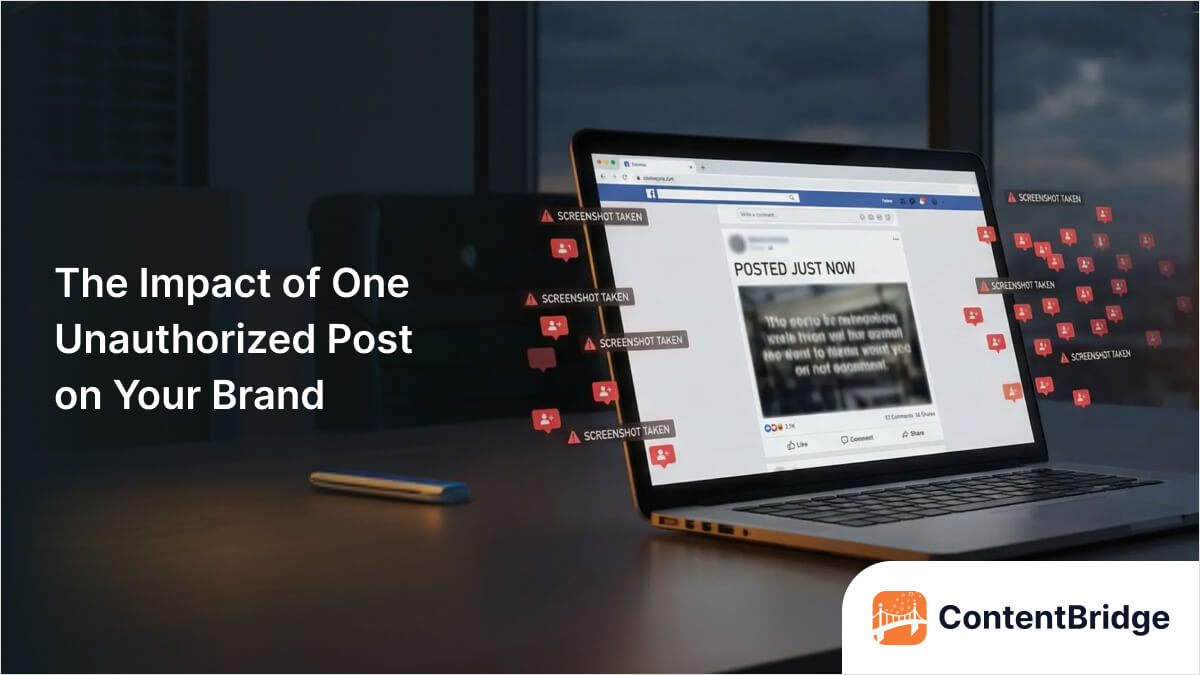

Brands spend years building trust, credibility, and a carefully crafted public image. Yet on social media, all of that effort can unravel in seconds. One post, published without approval or context, is often enough to trigger backlash, screenshots, and conversations a brand cannot control.
Social media is no longer just a marketing channel. It is a trust signal. According to MarketingCharts, 78% of consumers say a brand’s social media presence directly impacts their trust. For Gen Z, that number rises to 88%. When an unauthorized post goes live, the damage is not limited to a single tweet or story. It shapes how audiences perceive the brand as a whole.
This blog explores how a single unauthorized social media post can damage a brand overnight, why these incidents happen more often than teams expect, and what organizations must do to protect their reputation before the next mistake goes public.
Why Unauthorized Posts are a Growing Risk for Brands
Social media amplifies mistakes faster than any communication channel in history. Understanding this risk is the first step toward protecting your brand.
1. The Speed of Viral Exposure
Bad content travels fast. A controversial or embarrassing post can reach millions of users within hours of publication. By the time your team notices the problem, screenshots have already spread across multiple platforms.
Social media algorithms reward engagement. Controversial content often generates high engagement through comments, shares, and reactions. This means your worst posts may actually receive the most visibility. The same systems designed to help your content reach more people will amplify your mistakes.
Deletion does not solve the problem. Users can instantly screenshot and archive controversial content. Your attempt to quietly remove a post often backfires. It can create a secondary story about your brand that tries to hide something.
2. Multiple Contributors Create Chaos
Modern brands have many people touching social media. Content creators, regional managers, customer service teams, and executives all play a role. Each additional contributor increases the risk of something going wrong.
Frontline employees often lack formal training on brand guidelines. They may not understand the potential consequences of their posts. Without clear processes, even well-meaning team members can cause serious damage. Good intentions do not prevent bad outcomes.
Personal and professional wires get crossed easily. The famous KitchenAid incident happened when an employee posted political opinions on the corporate account. They meant to use their personal profile. One click on the wrong account turned into a national news story.
3. Scheduled Posts Ignore Context
Automated posting creates unique risks. Content scheduled weeks in advance cannot account for breaking news or tragedies. A cheerful promotional post during a national disaster comes across as callous and tone-deaf.
Many brands learned this lesson the hard way. Scheduled posts went live during mass shootings, natural disasters, and celebrity deaths. The brands appeared insensitive, even though no human approved the timing. Automation removes the human judgment that context requires.
4. Third-Party Access Multiplies Exposure
Brands rarely manage social media entirely in-house. Agencies, freelancers, and vendors often have access to accounts. Each external partner introduces additional risk factors beyond your direct control.
Contractors may work with multiple clients simultaneously. They might accidentally post your content to a competitor’s account or vice versa. Shared login credentials make it impossible to track who made a mistake. When something goes wrong, accountability becomes a guessing game.
Vendor turnover creates security gaps. Agency employees leave, but their knowledge of your passwords remains. Former contractors may retain access long after projects end. Without proper access management, your brand credentials live in places you cannot monitor.
5. Regulatory and Legal Consequences Escalate
Unauthorized posts can trigger compliance violations in regulated industries. Financial services, healthcare, and pharmaceutical brands face strict rules about public communications. A single unapproved post can result in fines, lawsuits, or regulatory investigations.
Industry regulations require documented approval processes for marketing content. The FTC mandates proper disclosure of sponsored content and endorsements. An employee who forgets to add required disclaimers exposes your brand to legal action. Ignorance of the rules does not protect you from penalties.
International operations face even greater complexity. Content acceptable in one country may violate laws in another. A post that seems harmless to your US team could breach EU advertising standards. Global brands must navigate a patchwork of regulations across every market they serve.
6. Audience Expectations Have Intensified
Today’s consumers hold brands to higher standards than ever before. Social media users expect authenticity, consistency, and accountability from the brands they follow. Mistakes that might have been overlooked years ago now generate immediate backlash.
Cancel culture moves faster than crisis response teams. Audiences organize boycotts within hours of problematic content appearing. Hashtag campaigns can trend globally before your leadership even learns about the issue. The window for damage control shrinks with every passing minute.
Younger demographics are especially unforgiving. Gen Z and millennial consumers research brands extensively before purchasing. One viral mistake can permanently disqualify your brand from consideration. Rebuilding trust with these audiences takes years of consistent effort.
Unauthorized posts can unravel years of brand trust in minutes. The solution is not restricting frontline teams from contributing, but rather implementing approval workflows that allow them to create content without direct account access. ContentBridge does exactly that, enabling your frontline teams to capture authentic moments on mobile while every post passes through multi-level approvals before publication. No shared passwords, no rogue posts, no brand risk.
Stop Social Media Disasters Before They Start
ContentBridge acts as your safety gate. Nothing goes live without proper approval, protecting your brand around the clock.
The Real Costs of Unauthorized Social Media Posts
Brand damage from unauthorized posts goes far beyond embarrassment. The financial and operational impacts can devastate organizations for years.
1. Immediate Revenue Loss
Customer trust directly connects to purchasing decisions. When that trust breaks, sales follow immediately. Research consistently shows consumers will abandon brands after social media incidents. They have too many alternatives to tolerate poor judgment.
Stock prices can drop within hours of a viral incident. Public companies face immediate financial consequences from social media crises. Investors watch brand sentiment closely. A single post can erase millions in market capitalization before trading closes.
Recovery marketing costs pile up quickly. Brands often spend heavily on advertising to repair damaged reputations. These unplanned expenses come directly from other marketing initiatives. Crisis response drains resources from growth activities.
2. Long-Term Reputation Damage
Some brands never fully recover from social media disasters. The internet has a long memory. Search results continue surfacing old incidents for years. New customers researching your brand will find these stories.
As per ResearchGate, Balenciaga lost over 100,000 Instagram followers during their 2022 controversy. Many of those followers never returned. The brand spent months and millions trying to rebuild its image. Some damage is permanent regardless of the quality of the apology.
Competitors capitalize on your mistakes immediately. While you manage crisis communications, rivals position themselves as safer alternatives. Market share lost during a crisis often stays lost. Your competitors will not wait for you to recover.
3. Employee and Partner Consequences
Social media incidents affect your internal stakeholders, too. Employees feel embarrassed and demoralized when their company becomes a negative trending topic. Morale drops. Productivity suffers. Top talent may start looking elsewhere.
Partners and vendors distance themselves from controversial brands. Retailers may pull products from shelves during a social media crisis. Sponsorship deals can vanish overnight. The ripple effects extend far beyond your social media following.
Common Causes of Unauthorized or Accidental Posts
Understanding how these incidents happen helps prevent them. Most unauthorized posts fall into predictable categories.
1. Posting From the Wrong Account
Account switching errors remain the most common cause of social media disasters. Team members managing multiple accounts select the wrong profile. Personal opinions suddenly appear on corporate channels. The mistake is often not discovered until the damage is done.
Social media apps make account switching too easy. A single tap can change which profile receives your next post. Busy employees moving quickly between tasks often make this error. The interface design works against careful verification.
Mobile posting increases this risk significantly. Smaller screens and on-the-go situations lead to more mistakes. Employees checking accounts during commutes or between meetings rush through verification. Speed and accuracy are mutually exclusive.
2. Missing Approval Processes
Many organizations have no formal content review before publication. Anyone with account access can post anything at any time. This freedom creates efficiency but eliminates safeguards. The tradeoff often proves costly.
Email and Slack approval requests are easily lost. Messages disappear in busy inboxes and endless threads. Content creators assume silence means approval. Posts go live without anyone actually reviewing them.
Urgent timelines pressure teams to skip reviews. Marketing opportunities often seem time-sensitive. Teams convince themselves that this one post can skip the normal process. These exceptions become the rule, and eventually something slips through.
3. Inadequate Training and Guidelines
Employees cannot follow guidelines they do not know exist. Many organizations fail to clearly document their brand voice standards. New team members inherit tribal knowledge that erodes over time. Consistency becomes impossible without written standards.
Training happens once during onboarding and never again. Social media best practices evolve constantly. Guidelines from two years ago may be dangerously outdated. Ongoing education rarely happens outside dedicated social media teams.
Consequences feel abstract until something goes wrong. Employees hear vague warnings about brand damage, but no concrete examples. The risks do not feel real until they experience a crisis firsthand. By then, the damage is already done.
Protect Your Brand with a Structured Approvals Process with ContentBridge
ContentBridge ensures every post receives proper review before publication. Build approval workflows that match your organization’s needs.
How to Prevent Unauthorized Social Media Posts
Prevention beats crisis management every time. These systems catch problems before they reach your audience.
1. Implement Multi-Level Approval Workflows
Every piece of content should pass through defined review stages before publication. Content creators submit posts for review. Managers or brand guardians verify alignment with guidelines. Nothing goes live until explicit approval is received. This is possible through a social media management platforms, which use approval workflows to ensure that only authorized posts make it to the social accounts of a brand.
Different content types may need different approval paths. Routine promotional content might need a single-level review. Sensitive topics or crisis-related posts should require executive approval. Flexibility within structure keeps content moving without sacrificing safety.
Today, frontline industries are increasingly encouraging their frontline teams to post everyday moments on brand social media. This is possible using a frontline-focused social media management platform like ContentBridge, which helps frontline teams engage in social media posting while enabling organizations to maintain proper approval workflows, thus eliminating chances of unauthorized posts.
2. Centralize Social Media Access
Account credentials should never be shared directly. Giving frontline teams social media passwords creates serious security and brand risks. Individual employees should access accounts through managed platforms. Access can be granted and revoked without changing passwords. Departed employees lose access immediately upon termination.
Role-based permissions limit what each user can do. Some team members can draft content but not publish. Others can review and approve, but not create. Publishing rights should be limited to trained, authorized personnel only.
Audit logs track every action taken on accounts. You can see who drafted, edited, and approved every post. This accountability changes behavior. People are more careful when they know their actions are recorded.
3. Create Clear Brand Guidelines and Training
Document your brand voice, approved topics, and forbidden content clearly. Written guidelines provide consistent standards across all team members. New employees can learn expectations quickly. Existing staff can refer to guidelines when unsure.
Training should happen regularly, not just during onboarding. Quarterly refreshers keep guidelines top of mind. Case studies of real incidents make risks concrete. Interactive sessions beat passive document reading.
Make guidelines accessible when and where people need them. Embed standards directly into content creation workflows. Pop-up reminders can catch common mistakes. Friction at the right moments prevents errors without slowing work.
Take Control of Your Social Media Governance
ContentBridge provides the approval workflows, access controls, and audit trails your brand needs. Stop unauthorized posts before they happen.
How ContentBridge Prevents Unauthorized Social Media Posts and Secures Brand Reputation
Unauthorized posts reveal a fundamental gap in social media governance. When anyone can post anything without review, brand damage becomes inevitable. The question shifts from ‘if’ to ‘when’ something goes wrong. ContentBridge addresses this gap by design.
ContentBridge is a frontline-focused social media management platform that acts as a safety gate for all your social media content. Nothing reaches your audience without passing through defined approval workflows. Content creators submit their work through structured channels. Designated approvers review and authorize publication. The system ensures every post receives appropriate oversight.
Zero-credential publishing eliminates account access risks. Frontline teams contribute content without ever touching social media passwords. They cannot post from the wrong account because they never access accounts directly. ContentBridge publishes approved content on their behalf, removing human error from the equation.
Complete audit trails document every action automatically. You always know who created, edited, and approved each piece of content. When questions arise, answers exist in permanent logs. Compliance teams and auditors can easily verify your governance processes.
Multi-level approval workflows match your organization’s structure. Different content types can require different approval chains. Sensitive topics automatically route to additional reviewers. Urgent content can move through expedited processes while maintaining oversight.
Contact us today to see how ContentBridge protects brands from unauthorized or accidental post-disaster events.
Frequently Asked Questions
How quickly can an unauthorized post damage a brand?
Brand damage from an unauthorized post can begin within minutes of publication. Social media algorithms amplify engaging content, including controversial posts, rapidly. Screenshots spread across platforms even faster than the original post. By the time most brands detect a problem, thousands or millions of users have already seen it.
The critical response window is typically one hour or less. Brands that respond quickly and authentically contain damage better than those that wait. However, most organizations lack the monitoring and decision-making processes to respond that fast.
What types of unauthorized posts cause the most damage?
Posts that contradict stated brand values cause particularly severe damage. Consumers perceive these as revealing a company’s true character. Political statements, insensitive content during tragedies, and offensive humor top the list.
Posts involving protected groups or sensitive social issues generate the strongest reactions. These incidents often attract media coverage beyond social media. Traditional news amplification extends reach and significantly prolongs the story.
Can brands recover from social media disasters?
Most brands can recover from social media incidents, but recovery timelines vary dramatically. Minor tone-deaf posts may blow over within days with a proper response. Major controversies involving core values can take months or years to overcome.
Recovery requires consistent positive behavior over time, not just apologies. Consumers watch whether brands change their actual practices. Grand gestures without sustained improvement often backfire and further extend the damage.
How do approval workflows prevent unauthorized posts?
Approval workflows create checkpoints between content creation and publication. No content reaches your audience without explicit authorization from designated approvers. This structure catches errors, brand guideline violations, and inappropriate content before they cause damage.
Automated workflow enforcement prevents people from skipping steps under pressure. Manual processes break down when teams are busy or stressed. Technology ensures required approvals happen regardless of circumstances or urgency.
What should brands do immediately after an unauthorized post?
First, assess the situation and remove the content if appropriate. Document the original post with screenshots for internal review. Then, determine whether public acknowledgment is necessary based on reach and severity.
If a response is warranted, acknowledge the mistake quickly and authentically. Avoid defensive language or blame shifting. Explain what happened and what you are doing to prevent recurrence. Speed matters more than perfection in initial response.