
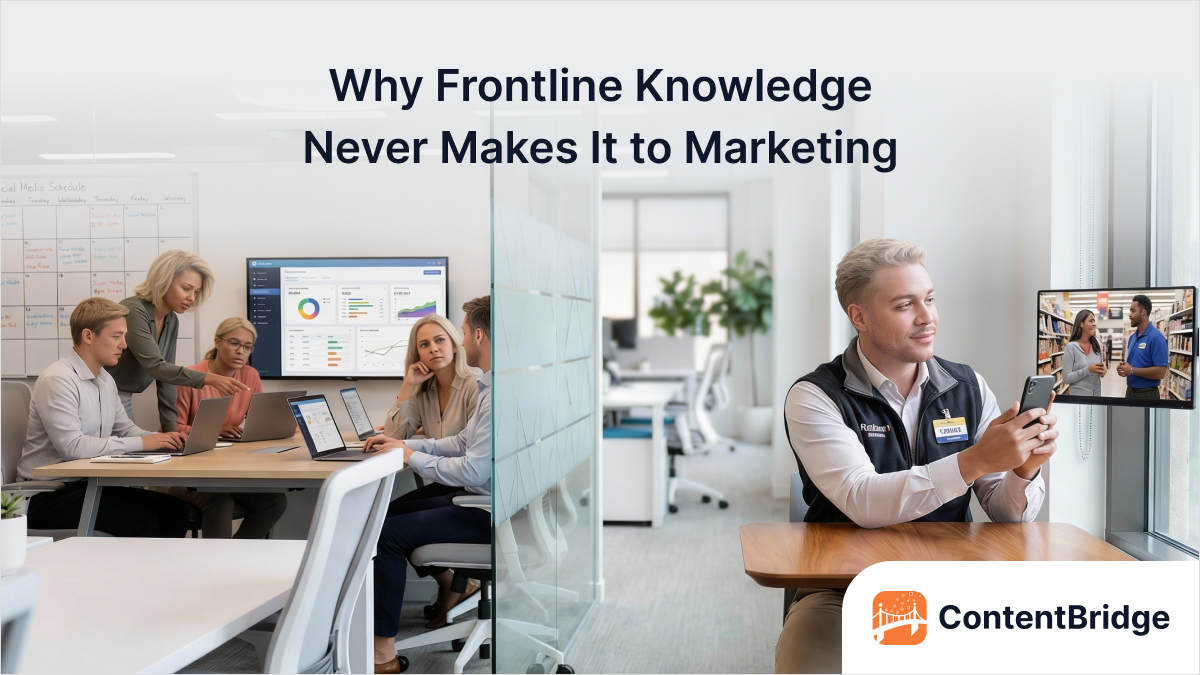

Frontline teams experience the most authentic brand moments every day. They interact with customers in real time, solve real problems, and witness stories that marketing teams actively try to capture on social media. Yet most of these moments never make it to official brand channels.
The reason is not a lack of intent or effort. It is a structural disconnect. Traditional social media workflows keep posting rights tightly controlled within marketing teams, while frontline workers remain completely outside the content loop. By the time marketing hears about a moment, it is often outdated, incomplete, or lost altogether.
This gap leaves brands relying on scheduled campaigns while missing spontaneous, high impact content created where the action actually happens. The solution lies in rethinking access, permissions, and approval workflows so frontline teams can contribute safely and marketing can stay in control.
This blog explores why frontline content gets lost before marketing ever sees it and how giving frontline teams structured access to social media can close that gap without compromising brand or compliance.
Why Frontline-Produced Content Gets Trapped in Personal Channels
Marketing teams often wonder where all the great content goes. The answer is simple: it stays where it was created. Personal phones and informal messaging apps become black holes for valuable brand content.
1. WhatsApp and Personal Messaging Create Content Silos
Frontline workers naturally share content through the tools they already use. WhatsApp groups become the default sharing method for photos and videos. This feels easy for employees but creates major problems for organizations.
Content shared in personal chats disappears from organizational view. Marketing has no visibility into what exists across hundreds of employee devices. When someone captures a perfect customer moment, it reaches coworkers but never reaches the content team.
2. Employee Departures Mean Lost Content Forever
Your best content creators will eventually leave your organization. When they do, their phone goes with them. All those customer photos, event videos, and authentic moments vanish instantly. There is no backup, no archive, and no way to recover what was lost.
This represents a significant resource waste that compounds over time. Every departure creates a content gap that marketing must fill from scratch. The authentic moments that drove engagement are gone forever.
3. No Clear Pathway Exists for Content Submission
Most organizations lack a simple way for frontline staff to share content. Employees want to contribute but face friction at every step. Should they email photos? Upload to a shared drive? Send via Slack?
Without a clear submission pathway, good intentions fail. The effort required exceeds the perceived benefit. Valuable content stays on personal devices because sharing feels like extra work.
Bring Frontline Content Into Social Media Without Losing Control
Let frontline teams submit real moments while marketing reviews and approves every post before it goes live using ContentBridge.
How Scattered Content Hurts Marketing Performance
Beyond compliance concerns, lost frontline content directly impacts marketing effectiveness. Your team works harder to create content that performs worse than what already exists.
1. Authentic Content Outperforms Polished Corporate Photos
Audiences have developed corporate content fatigue. They scroll past staged photos and polished promotional material. Real moments from real employees capture attention in ways that studio shoots cannot.
User-generated content typically delivers higher engagement rates than professional alternatives. Yet marketing teams keep paying for content shoots. Meanwhile, better content sits unused on frontline phones.
2. Marketing Creates Duplicates of Existing Content
Your content team may spend hours producing material that already exists. That store opening celebration was captured by employees on-site. The customer appreciation event was documented in real time.
Without visibility into frontline content, marketing recreates what employees already captured. This wastes budget, time, and creative resources. The authentic version often resonates better with audiences anyway.
3. Content Droughts Force Lower-Quality Alternatives
Marketing teams face constant pressure for fresh content. When the authentic content pipeline stays blocked, alternatives fill the gap. Stock photos replace real moments. Staged scenes replace genuine interactions.
Audiences notice the difference. Engagement drops when content feels manufactured. The content drought persists while the solution remains trapped on personal devices.
4. Competitive Disadvantage Grows Over Time
Your competitors who capture authentic content gain an edge. Their feeds show real employees and genuine customer moments. Their audiences engage more deeply with relatable content.
Meanwhile, your brand appears disconnected from reality. The gap widens as competitors build content libraries. Every month of lost frontline content represents missed opportunities.
How to Build a Centralized Social Media Content Intake System for Frontline Teams
Solving this problem requires a structured approach. Organizations need systems like ContentBridge built for frontline workers that make social media content submission easy while maintaining proper controls.
1. Create a Single Submission Pathway
Employees need one clear place to share content with marketing. This removes the friction that blocks current sharing. When submissions are simple, participation naturally increases.
A mobile-first approach meets frontline workers where they are. They can submit directly from their phones during shifts. The pathway should feel as easy as sharing on WhatsApp.
Use a frontline social media management platform like ContentBridge to create clear approval pathways for frontline teams. Such platforms allow frontline teams to capture and share authentic content and social media managers easily manage approvals.
2. Capture Consent and Rights At the Source
When employees submit content, immediately collect required permissions. Capture consent forms for anyone featured in photos or videos. Document usage rights before content enters your library.
This front-end capture solves downstream compliance problems. Marketing receives content with proper documentation attached. Auditors can trace permissions back to the original submission.
3. Implement Approval Workflows That Scale
Content needs review before publication. Build workflows that route submissions to appropriate approvers. Include compliance checks for regulated industries.
These workflows should not create bottlenecks. Set clear timelines and escalation paths. Mobile-friendly approval lets managers review content from anywhere.
4. Maintain Complete Audit Trails Automatically
Every action in the content lifecycle needs documentation. Record who submitted content and when. Track every edit, comment, and approval. Preserve this history for compliance purposes.
Automated logging removes the burden from busy teams. The system captures what manual processes miss. Auditors receive comprehensive records without requiring staff to make extra effort.
Stop Losing Frontline Content Before Marketing Sees It
Collect, review, and publish frontline social media content in one governed workflow with ContentBridge.
How ContentBridge Brings Frontline Content Into Social Media Safely
Frontline content does not get lost because it lacks value. It gets lost because traditional social media workflows were never designed to include the people closest to real customer moments. While marketing teams plan campaigns and calendars, frontline teams operate in real time, capturing stories that feel authentic, timely, and human. When these two worlds stay disconnected, brands miss some of their most powerful content opportunities.
The answer is not to give unrestricted social media access to frontline workers. It is to give them the right access through a frontline social media management platform built around structured permissions, visibility, and approvals. With the right platform in place, frontline teams can contribute content as it happens, while marketing and compliance teams retain full control over what gets published.
ContentBridge is designed specifically for this purpose. It enables frontline workers to participate in social media content creation without ever posting directly to live channels. Frontline teams can submit content from the field, marketing teams can review, edit, and approve it, and only approved content goes live.
This creates a shared workflow where real frontline stories are surfaced, reviewed, and published without risk.
By bringing frontline teams into a governed social media process, ContentBridge helps brands close the gap between lived experiences and marketing output. The result is more authentic content, faster turnaround, and complete confidence that every post meets brand and compliance standards.
If your frontline teams are already creating powerful moments, ContentBridge ensures those moments are no longer lost. Request a demo of ContentBridge and see how frontline social media participation can work without breaking your approval workflows.
Frequently Asked Questions
Why does frontline content matter for marketing?
Frontline content captures authentic moments that audiences find relatable and engaging. These real interactions outperform staged corporate content in most metrics. Your employees witness customer wins, team celebrations, and brand moments every day.
This content builds trust because it shows real people and genuine experiences. When properly captured, frontline content can fuel your social media, website, and marketing campaigns. Organizations that leverage authentic content typically see stronger audience engagement.
What compliance risks exist with informal content sharing?
Informal channels like WhatsApp create several compliance gaps. You cannot document consent for people featured in content. There is no approval trail showing who reviewed the material before publication.
For regulated industries, these gaps violate specific requirements. Healthcare organizations may breach HIPAA by storing undocumented patient information. Financial services firms fail FINRA archiving standards. Any organization faces liability without proper documentation of content.
How can organizations capture frontline content effectively?
Success requires making submission as simple as informal sharing. Provide a mobile app that frontline workers can use during their regular workflows. Reduce friction by eliminating complex upload processes.
Combine easy submission with automatic metadata capture. Collect consent forms, tag content with context, and route submissions through approval workflows. The system should feel simple to users while capturing what compliance teams need.
What should auditors see in a content management system?
Auditors expect comprehensive documentation of your content lifecycle. This includes records of who created each piece of content and when it was created. They want to see approval workflows with timestamps showing review completion.
Consent documentation should be attached to relevant content items. Version history should show any edits made after the initial submission. Export capabilities let you provide this information in formats auditors can review easily.