

Municipalities
Social Media Management for Municipalities and Local Government
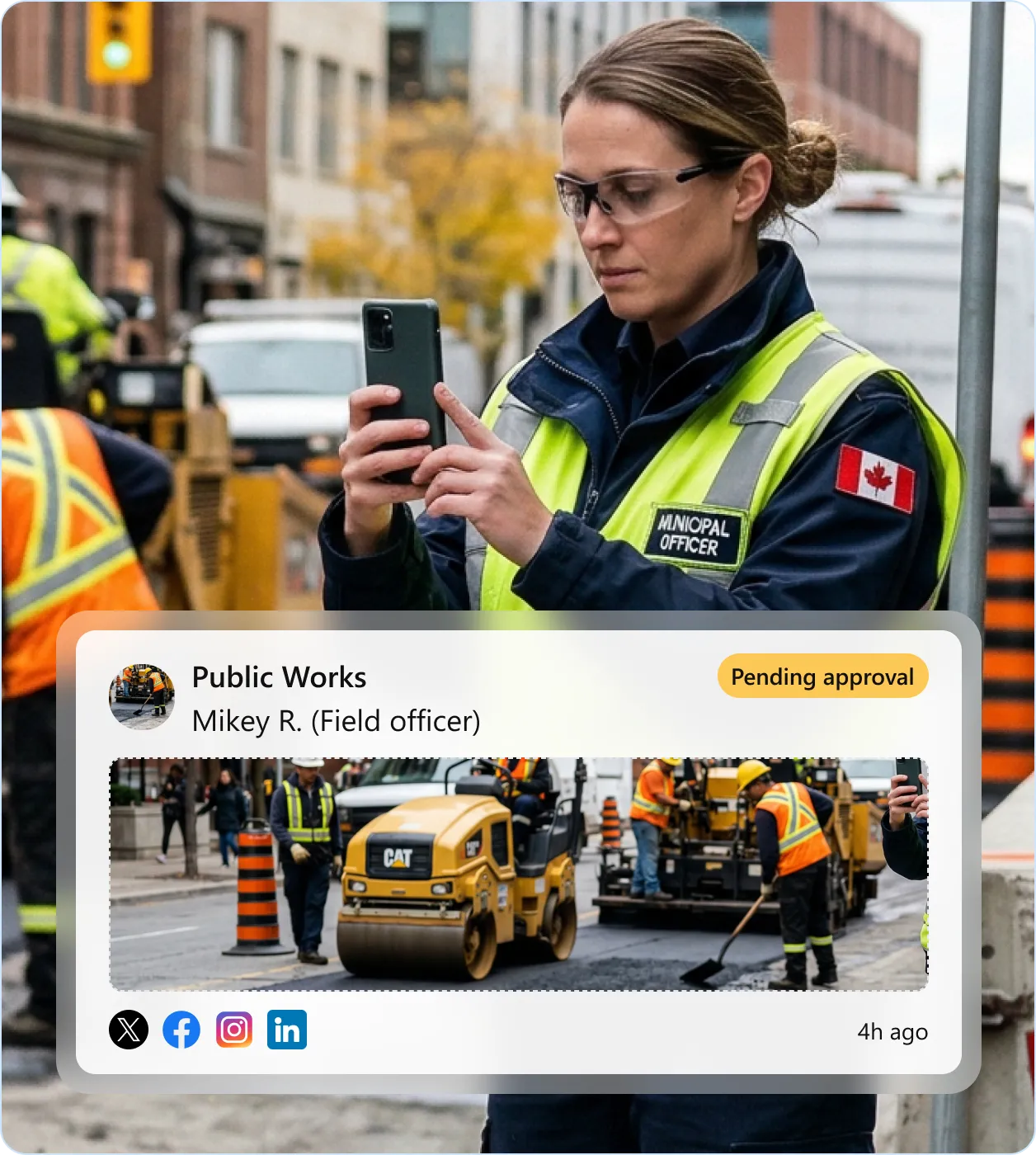
Your municipality employs thousands of frontline workers across 15+ departments, but one or two communications staff manage every social media post. Road repairs, bylaw enforcement, park events, waste collection reroutes: none of it reaches your official accounts because field staff have no way to submit content from their phones. ContentBridge turns municipal employees into content creators with approval workflows that enforce political neutrality, MFIPPA compliance, and your municipality’s social media policy before anything goes live.
Every department
one dashboard
<18 hrs
submission to publish
Every post
reviewed before publish
Why Municipal Social Media Stalls at Scale
Cities, towns, and regional municipalities with thousands of employees across dozens of departments hit the same three walls when they try to maintain an active social media presence. If any of these sound familiar, the problem is structural, not creative.

Your frontline workers post on personal accounts because there is no official channel
According to CivicPlus, 92% of government agencies say social platforms are essential to their communication strategy. Yet in most municipalities, the staff who do the most visible work have no way to get it onto official accounts. There is no submission channel on their phones, no upload tool at the job site, and no path from a bridge rehabilitation or storm debris cleanup to your social platforms. The gap between what your municipality accomplishes and what residents see online grows wider every shift. One or two communications staff cannot capture what thousands of frontline workers see across dozens of departments and wards.

One unreviewed post triggers an integrity investigation, an FOI request, or both
A Pickering, Ontario councillor was suspended seven times, totalling 490 days, largely over social media misconduct including publicly naming residents and posting discriminatory content. An Ottawa councillor was formally reprimanded after an integrity commissioner found her social media posts constituted harassment. The City of Victoria disabled all public comments after staff spent over six hours moderating racist remarks on a single post. Under the Municipal Elections Act, social media posts during campaign periods can constitute third-party advertising. Without a municipal social media policy backed by pre-publication review, every account is a liability.

Two communications staff cannot cover 15 departments across the entire city
The Town of Collingwood, Ontario has two staff handling all internal and external communications, including social media. They cannot monitor accounts 24/7. Inappropriate comments sat visible for entire weekends. The City of Toronto employs over 42,000 people across public works, waste management, parks, building services, bylaw enforcement, and dozens more departments. According to ROMA, Ontario’s 444 municipalities collectively employ 226,000 workers. Your CAO expects consistent social media presence, but your communications office cannot photograph a snow removal crew in Ward 3 and a ribbon cutting in Ward 7 on the same morning.
From the Field to Official Municipal Accounts in Three Steps
Every post follows a controlled, auditable path from the field to your municipality’s official social accounts. Here is how it works.
Staff Creates the Post
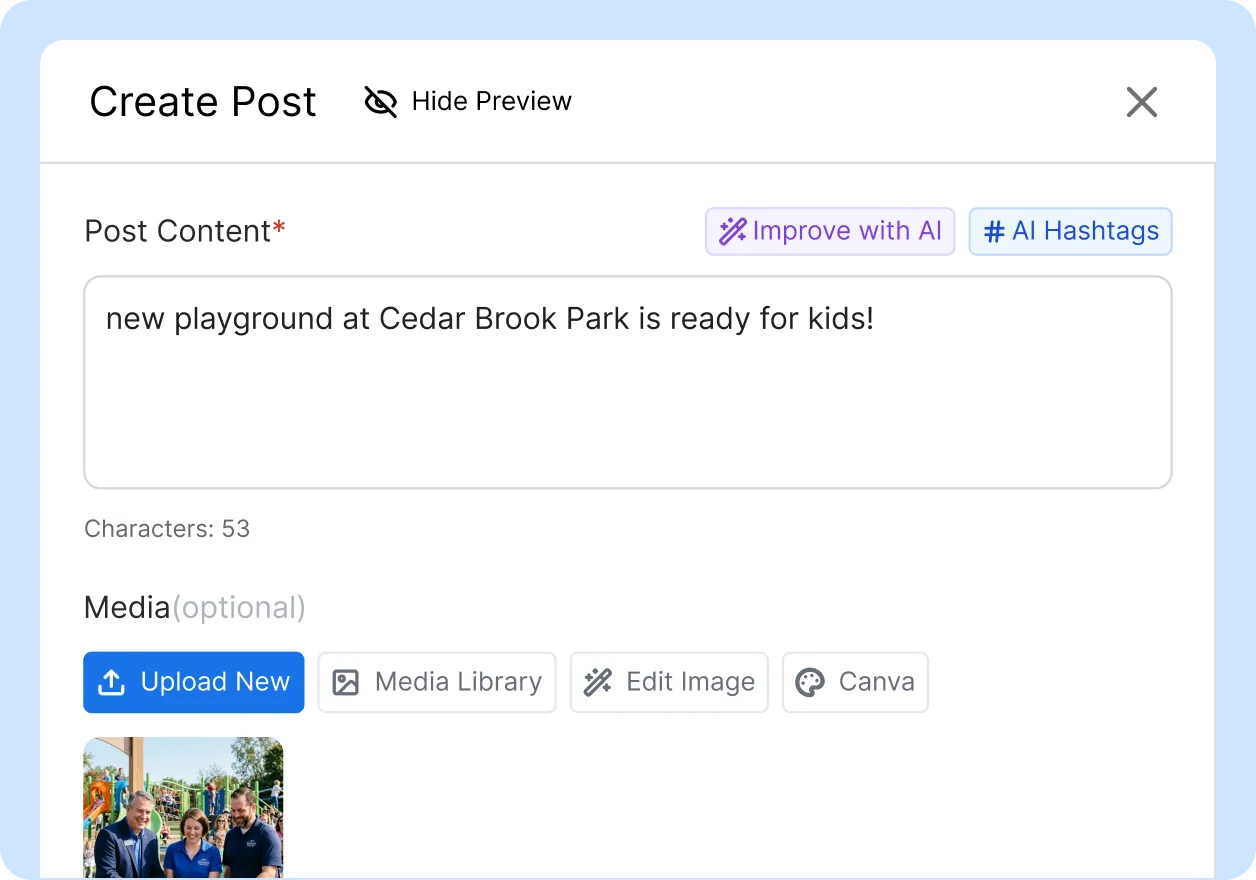
Any municipal employee, from a public works crew lead to a parks coordinator to a bylaw officer, photographs an infrastructure milestone, service update, or community event from their phone. They draft a post, select target platforms and ward tags, and submit for review. They never see or touch your social media credentials.
Your Chain Reviews the Post
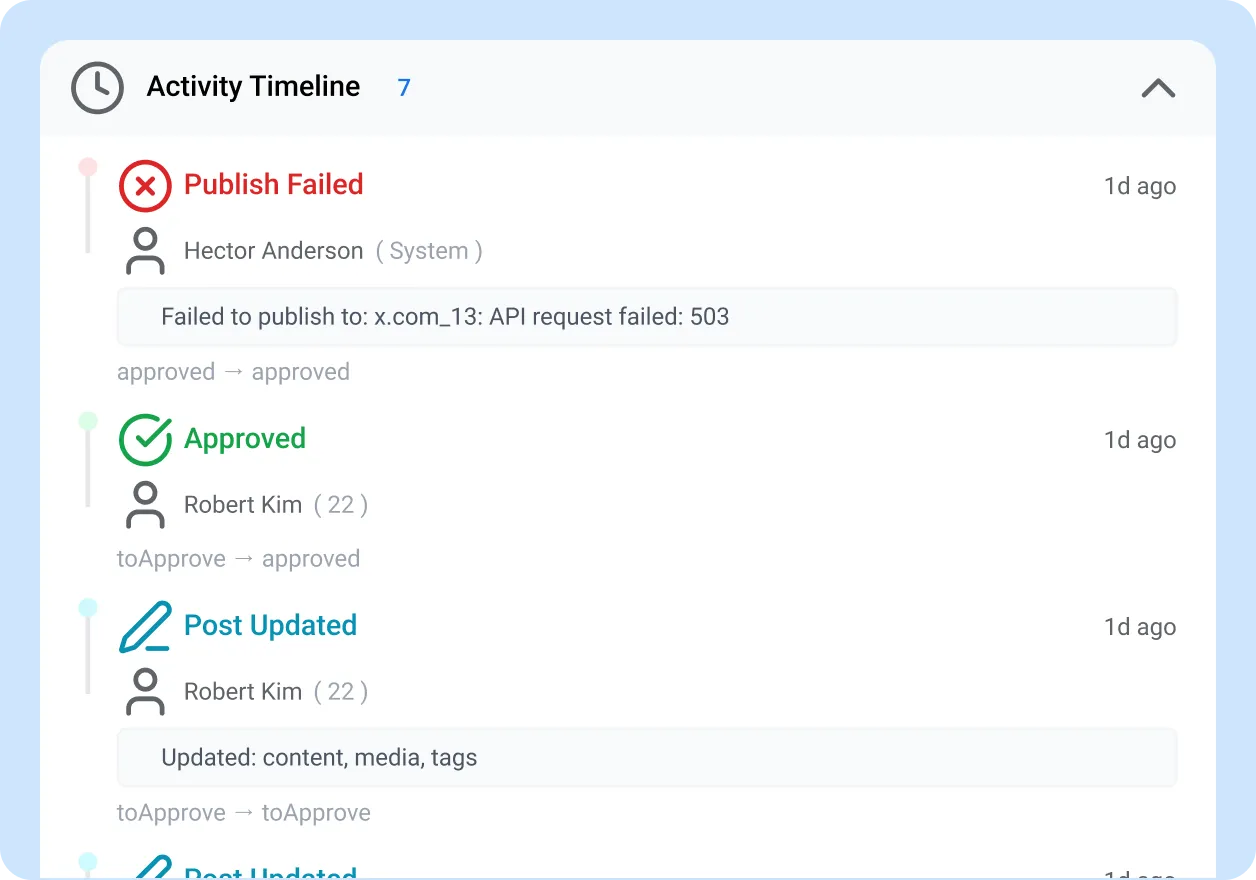
The post flows through your configured approval levels: department head checks accuracy, communications office verifies political neutrality and brand alignment, and legal or FOI reviewer gives final sign-off if the content involves identifiable residents or sensitive subjects. Reviewers can approve, reject, or request changes with threaded feedback. Parallel reviewers evaluate simultaneously.
Auto-publish
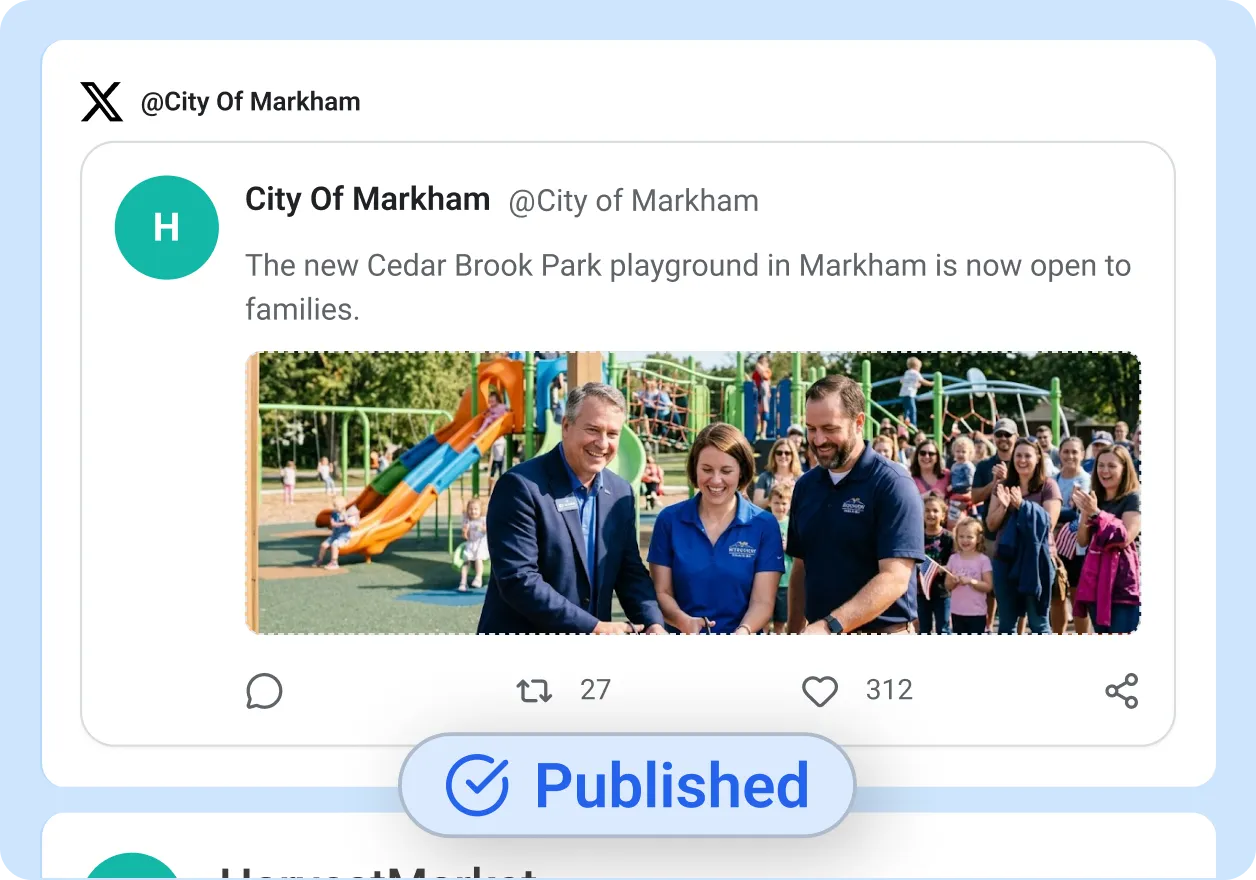
Once the final reviewer approves, ContentBridge publishes the post to the municipality’s official Facebook, Instagram, X, and LinkedIn accounts automatically. The complete audit trail records every action: who created the post, who reviewed it, what changed, and when it went live. This record supports MFIPPA and FOIPPA compliance.
Three Ways Municipal Teams Build Public Trust Through Social Media
The content that performs best for municipalities is the content your frontline workers already see every day.

Public Works, Waste, and Infrastructure Updates
Crews document road resurfacing, pothole repairs, snow removal progress, water main replacements, waste collection reroutes, and bridge rehabilitation from the field. Building inspectors share permit milestone completions. Residents see the work happening in real time instead of just the disruption. Before-and-after content shows taxpayers where their property tax dollars go, ward by ward. Each submission goes through communications review before publication.
Powered by: content creation + approval workflows

Parks, Recreation, and Community Events
Parks staff capture Canada Day festivals, sports leagues, pool openings, trail conditions, and cultural celebrations. Library teams promote programming and registration from their branches. Recreation coordinators share swim lesson enrolment and arena schedules. This is local, authentic content from the people who run the programmes, not generic stock imagery from city hall. According to CivicPlus, 53% of government agencies use social media to respond to resident questions.
Powered by: media gallery + content guidelines

Bylaw Enforcement, Animal Control, and Ward-Level Transparency
Bylaw officers post compliance reminders for parking, noise, property standards, and animal control. Ward-specific accounts share neighbourhood updates that matter to local residents: a new playground in Ward 5, overnight construction in Ward 12, a water restriction lifted in Ward 8. Councillors and staff create content for their wards while the communications office reviews every post for political neutrality and accuracy before publication. Coverage maps show which wards are active and which have gone silent.
Powered by: coverage maps + content guidelines + approval workflows
Six Capabilities Built for Multi-Department Municipal Operations
These are the capabilities that matter when your content comes from thousands of frontline workers in the field, not from a communications desk at city hall.
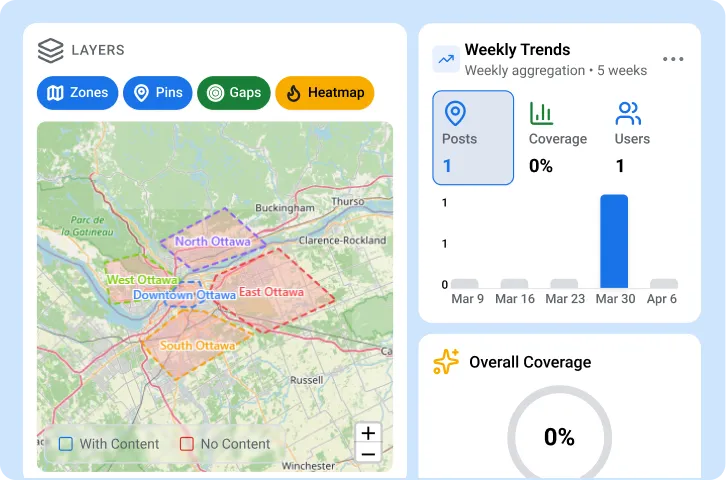
Multi-department and ward-level coverage maps
Interactive maps show which departments and wards are creating content and which have gone silent. Filter by department, ward, neighbourhood, or date range. Your CAO sees at a glance whether Ward 3 public works has posted this week or whether the south-end recreation centre has gone dark. Coverage trend reports track content activity across the entire municipality.
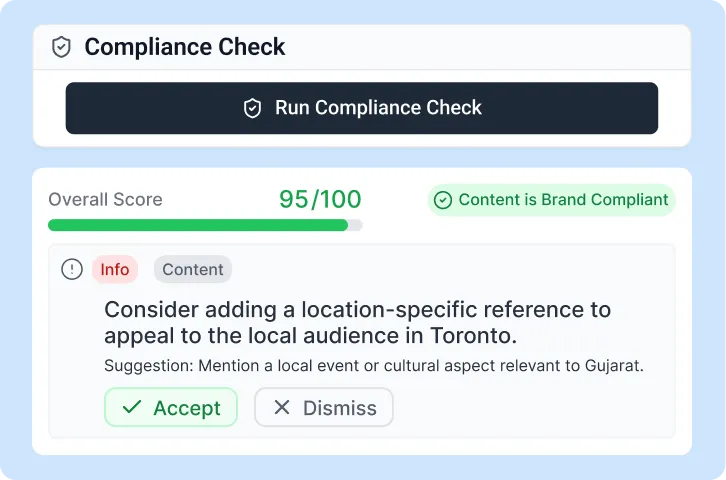
Content guidelines for political neutrality, privacy, and election periods
Configure compliance rules that flag partisan language, identifiable residents, or sensitive subjects for additional review. During municipal election periods, content guidelines restrict posts that could constitute third-party advertising under the Municipal Elections Act. The AI compliance check reviews every post against your municipality’s social media policy before it enters the approval queue. Staff learn your content standards through the feedback loop.
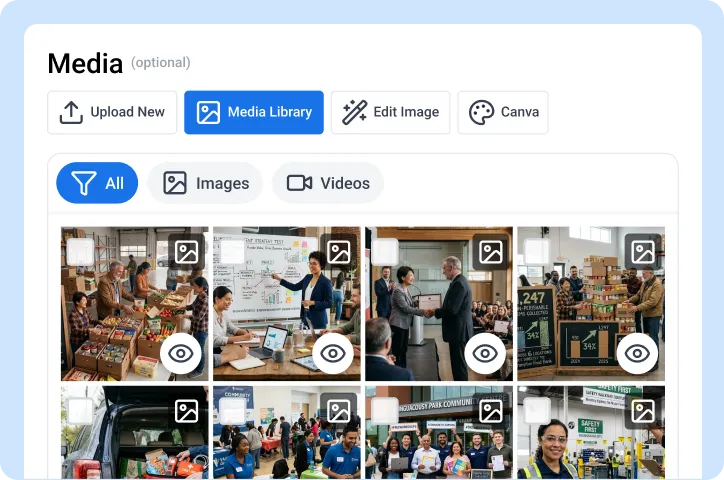
Media gallery for municipal visuals
Browse every photo and video captured across all departments in a searchable, Pinterest-style gallery. Filter by department, ward, date range, event type, and creator. Approved visuals are automatically tagged with metadata for easy retrieval. Bulk-export collections for annual reports, council presentations, community newsletters, or FOI responses.
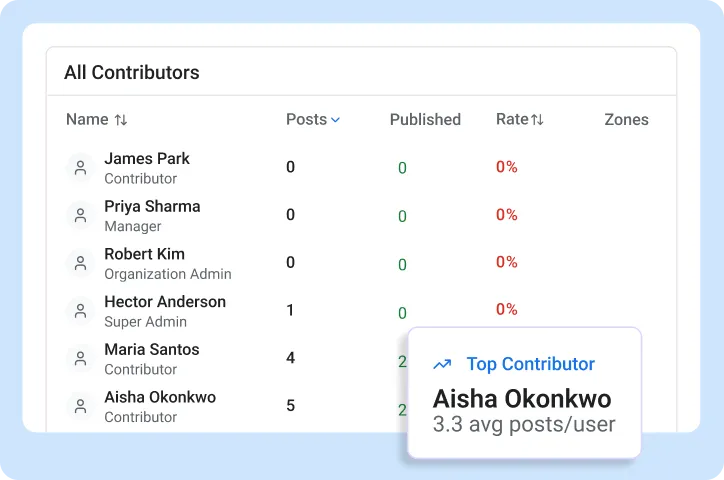
Leaderboards and contributor reports
Ranked department lists with gold, silver, and bronze medals show which teams are most active. Filter by department, ward, or time period. Weekly and monthly leaderboards create friendly competition that drives content volume without mandates from council. Contributor reports break down submissions by individual staff member, approval rate, and average turnaround time.
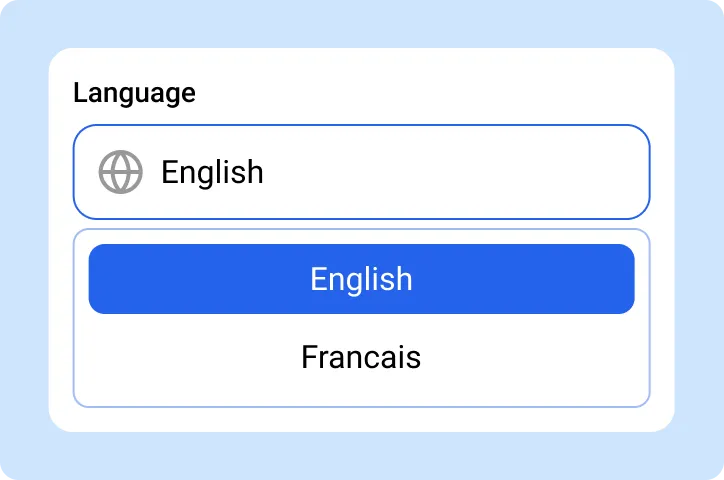
Bilingual support (EN/FR)
Municipalities like Ottawa, Moncton, and those in Quebec face bilingual service obligations with real penalties for non-compliance. ContentBridge supports content creation, review, and publication in both English and French natively. Staff submit content in either language, and your approval chain verifies that both versions meet your municipality’s official languages standards before publication.
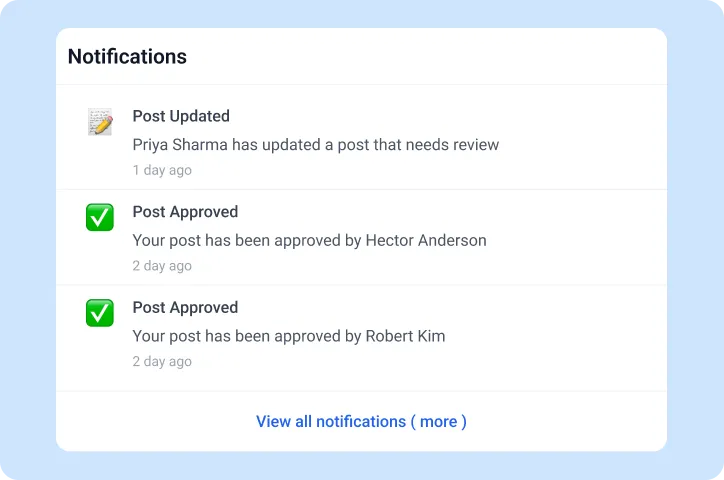
Real-time notifications
Push notifications arrive the instant a post needs review. WebSocket-powered live updates keep the approval queue current with no page refreshes. Reviewers can approve, reject, or request changes directly from the notification on their phone. When a staff member submits a time-sensitive post, the next reviewer in the chain sees it within seconds.

“Before ContentBridge, two communications staff managed all our social media with stock images and council recaps. Our public works crews, parks coordinators, and bylaw officers had no way to contribute. Five months after rollout, over 80 frontline workers submit content across 12 departments. Residents see snow removal updates from their own neighbourhoods and real coverage from community events. Every post goes through our communications coordinator and MFIPPA reviewer before publication. Approval turnaround averages under eight hours, and resident engagement is up 65%.”

Jennifer Whitfield, Director of Corporate Communications
Municipal Compliance Followed in Every Post
Freedom of information laws, privacy legislation, and integrity commissioner oversight govern every post your municipality publishes. ContentBridge gives your reviewers the workflow and audit trail to enforce compliance before anything goes live.

MFIPPA and FOIPPA records retention
Social media posts by municipalities are public records under MFIPPA (Ontario), FOIPPA (British Columbia), and equivalent provincial legislation. Posts, comments, edits, and deletions are all subject to freedom of information requests. ContentBridge’s audit trail provides a complete, timestamped, exportable record of every post’s lifecycle. Your municipality cannot rely on social media platforms to meet retention obligations.

PIPEDA: Resident photography consent
Photographing identifiable residents at municipal events and posting to social media constitutes collection and use of personal information under PIPEDA. Provincial equivalents (BC PIPA, Alberta PIPA) apply for intra-provincial activities. Your consent-aware reviewer screens resident-facing content through ContentBridge’s approval workflow before publication.

Integrity commissioner oversight
Ontario municipalities are required to appoint integrity commissioners. Social media conduct falls under municipal codes of conduct, and violations can result in suspensions, reprimands, or pay deductions. Ontario’s Bill 9 (Municipal Accountability Act, 2025) proposed giving integrity commissioners the power to remove councillors in exceptional circumstances. ContentBridge’s audit trail documents every action for integrity investigations.

Official Languages Act and bilingual requirements
The City of Ottawa presents official social media channels in both official languages. Moncton must publish bylaws and public communications bilingually. Quebec’s Charter of the French Language (Bill 96) adds French-language requirements with penalties of $3,000 to $30,000 per day for non-compliance. ContentBridge’s bilingual platform supports content creation and review in both English and French.

Employer liability for municipal social media
In Toronto Transit Commission v. ATU, Local 1313, an Ontario arbitration held that employer-operated social media accounts are part of the workplace. Municipalities have a duty to monitor their own channels and can be held liable for employee misuse or for failing to protect employees from public harassment. ContentBridge’s approval workflow provides the oversight structure.

Municipal Elections Act: Campaign period restrictions
During municipal election periods, social media posts by the municipality or its employees can constitute third-party advertising if they promote or oppose a candidate or question on the ballot. Ontario’s Municipal Elections Act sets spending limits and registration requirements for third-party advertisers. ContentBridge’s content guidelines can restrict or flag election-sensitive content during campaign periods, and the audit trail documents compliance for any post-election scrutiny.
Common Questions About ContentBridge for Municipalities
Does ContentBridge work for municipalities with 15+ departments posting to separate accounts?
Yes. ContentBridge supports large municipalities with dozens of departments, each with its own approval chain, content guidelines, and connected social accounts. Your communications office sees every department and ward from a single dashboard. You configure separate approval workflows for public works, waste management, parks, bylaw, building services, and any other department. Coverage maps highlight content gaps across departments and wards, so your communications office can follow up before any area falls behind.
How does ContentBridge help municipalities comply with MFIPPA records retention requirements?
Social media posts by municipalities are public records under MFIPPA (Ontario), FOIPPA (British Columbia), and equivalent provincial legislation. ContentBridge maintains a complete, timestamped audit trail for every post, recording each action from initial submission through every reviewer’s decision to final publication. This record is exportable and searchable, supporting your records retention obligations. Organizations should consult their municipal clerk or legal counsel for specific retention schedules.
Can elected officials’ social media be routed through ContentBridge?
ContentBridge can manage the municipality’s official accounts and any accounts that elected officials agree to route through the platform. Posts from council-managed accounts follow the same approval workflow as departmental content. However, personal social media accounts of elected officials remain outside the platform’s scope unless the individual chooses to use it. Organizations should consult their integrity commissioner for guidance on elected official social media policies.
How does ContentBridge handle bilingual posting requirements?
The full platform operates in English and French. Content creation, approval workflows, notifications, and the help centre are available in both languages. For municipalities with bilingual service obligations such as Ottawa, Moncton, or municipalities in Quebec, ContentBridge supports content creation and review in both official languages. Your approval chain can include a language reviewer to verify bilingual compliance before publication.
How quickly can a municipality get started with ContentBridge?
Most municipalities have their first department configured and submitting posts within one day. ContentBridge includes municipal government templates that pre-configure common department structures and approval hierarchies. You add departments, invite staff through bulk CSV import or shareable invite links, and configure approval chains at your own pace. A municipality with 10 departments typically completes full rollout within two to three weeks.
Other Industries Using ContentBridge
Municipalities and local government are one of the sectors ContentBridge serves. See how frontline content creation works in other verticals.

Government Agencies
Provincial and federal agencies empower every department to communicate with constituents through controlled approval workflows and bilingual support.

Law Enforcement
Police departments empower every officer to share community engagement stories while multi-level approval protects investigations and officer safety.

Construction and Property
Site crews capture project milestones, safety culture content, and recruitment material with NDA-aware approval workflows and full audit trails.